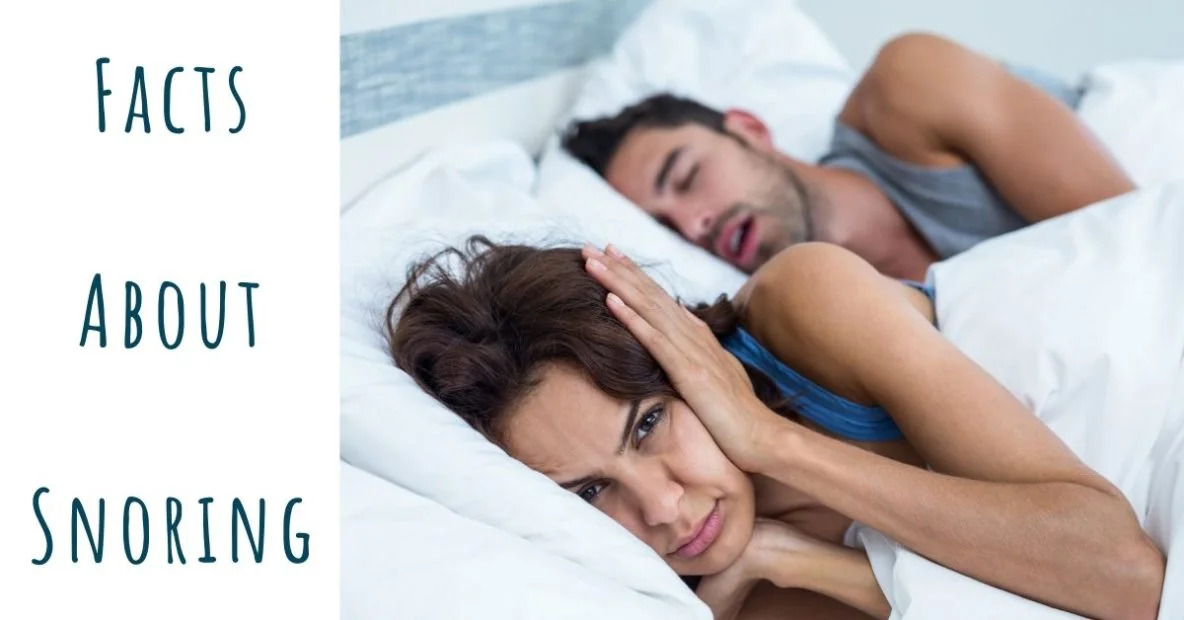
Snoring can disrupt your sleep and keep your partner awake at night. It’s a harsh sound that disturbs the quiet of the middle of the night, and can lead to fights and arguments at home. Snoring occurs when the tissues in the back of your throat vibrate as you breathe in through your mouth, causing the loud sound we all know as snoring. Here are a few more facts you probably didn’t know about snoring.
Fact: Snoring is Common
Millions of Americans of all ages snore during the night, and it’s not usually a cause for concern. Light snoring can be an annoyance to your partner, but as long as you’re both able to sleep, snoring isn’t doing any harm. Did you know that about half of people will go through periods of time when they snore? Snoring is more common in men than in women, and roughly 40% of adult men snore on a regular basis. It’s generally more common among seniors than younger adults, and those who are overweight are also more likely to snore.
Fact: Snoring is Caused by Restricted Airflow
Why do tissues at the back of your throat vibrate during sleep, but not during the day? When you’re up and about, the muscles in your throat and neck are engaged, and your airway is open. During relaxing sleep, these muscles rest, and this relaxation can cause the muscles to partially block the throat, restricting airflow and driving air against the tissues at the back of your throat and causing them to vibrate.
Fact: Allergies Increase Your Chance of Snoring
If you’re suffering from a cold or flu, or have springtime allergies, you’re more likely to snore. Swollen tonsils, an inflammation of the throat, or a nasal congestion will all narrow the airway, and increase your chances of snoring.
Fact: Alcohol Can Make You Snore
Do you snore more after a night out with friends? Alcohol is a wonderful muscle relaxant, and while it makes you feel relaxed and helps you let go of stress from a busy work week, it will also affect your throat muscles. Alcohol can relax your throat muscles as you sleep, making you snore, or making a light snore far more pronounced.
You Can Wake Yourself up From Snoring
Not only is snoring an annoyance to your partner, it can also impact the quality of your own sleep. It’s possible to snore so loudly that you wake yourself up! You may not realize why you woke up, but your partner will be able to verify that you were snoring as you woke up. Along with disrupted sleep, snoring can lead to a sore throat in the morning, or a very dry mouth.
Fact: You Can Reduce Snoring by Sleeping on Your Side
If you sleep on your back, the relaxed muscles of your throat will sink even further into the already smaller airway, increasing your chances of snoring. Sleeping on your side can keep the airway open and reduce snoring. Train yourself to sleep on your side by placing a pillow at your back to prevent rolling onto your back during the night.
Snoring Could be a Sign of Sleep Apnea
While light snoring is nothing to worry about, heavy snoring could be a sign of sleep apnea. This is a serious sleep disorder that affects your quality of sleep, and leads to insomnia, fatigue, and trouble focusing during the day. In obstructive sleep apnea, the muscles in the throat relax, causing heavy snoring. They will relax so much that your airway can become blocked, and you stop breathing for a moment. You’ll startle awake with a choking or gasping sound, and even if you’re only awake for a second or two at a time, your sleep will be affected.
Whether you’ve been snoring your whole life or just a few weeks, take it seriously, and investigate the cause. If you can’t easily identify why you’re snoring, perform some sleep tests to find out if you might have sleep apnea. Not only will treating sleep apnea help you sleep better and wake up refreshed, it will put an end to the snoring, and you and your partner will get a better night’s sleep.