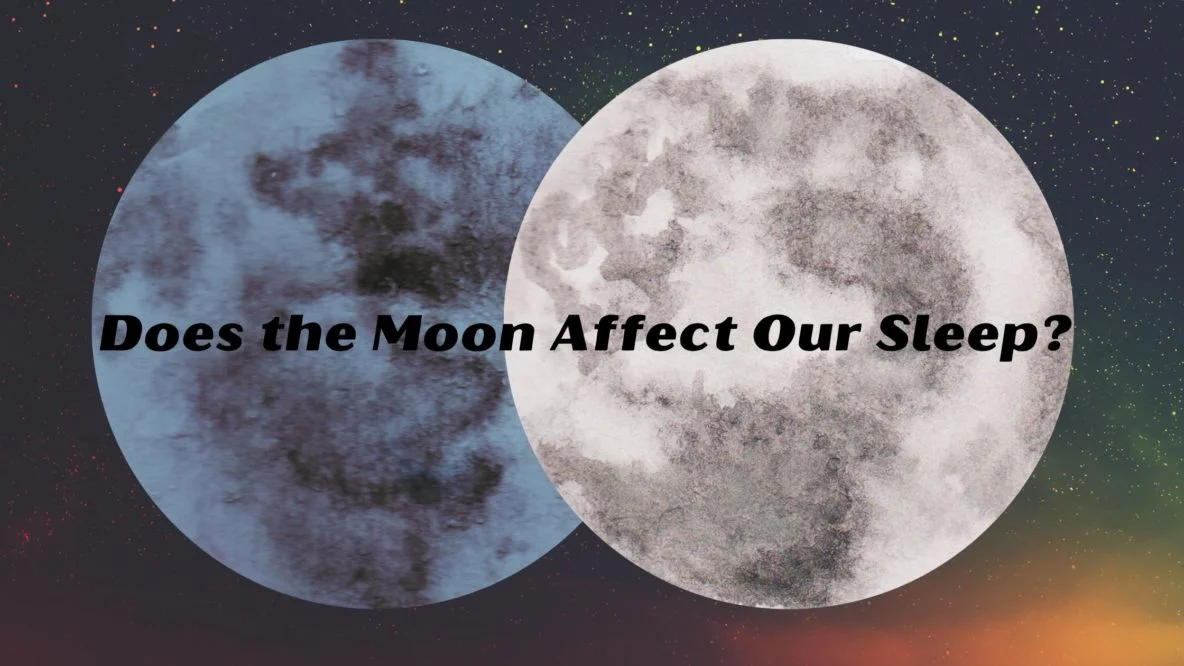
Have you ever wondered if the moon affects your sleep? A new study shows that your sleep patterns can be affected by the moon. This recent study discovered that on the nights before a full moon, we tend to go to sleep later and sleep less.
Moonlight Vs. Artificial Light
This study looked at sleeping habits in two different locations. First, researchers examined the sleep patterns of people in rural communities in Argentina. These communities had very little access to artificial light and scheduled their days around natural sunlight. Researchers found that in these rural communities, sleep patterns changed significantly based on the moon. On the nights just before the full moon, people went to bed later and slept the least. Interestingly, the nights with less sleep didn’t happen on or around the full moon, but specifically during the 3 to 5 days before the full moon.
Before artificial light was readily accessible, people would spend a lot more time outside at night leading up to the full moon. The extra light made it easier to move around, work later harvesting crops, or meet with neighbors and friends. The full moon essentially made the days longer for a few days.
The second group included college students in Seattle, Washington. These students used a lot of artificial light and were often up late studying. Surprisingly, the students also had different sleep patterns before the full moon. The effect was smaller, but the students were up later on the nights before the full moon and slept less.
Melatonin and the Moon
Researchers aren’t entirely sure why this happens. However, they believe it’s likely due to the increased light on the nights leading up to the full moon. In the days before the full moon, the moon rises earlier and makes the evening brighter. Researchers speculate that the brighter evenings reduce the amount of melatonin your body produces. With less melatonin on these nights, you may feel more alert and stay up later.
We’re all very sensitive to light. Our circadian rhythm, or internal body clock, is regulated by light. When we’re exposed to a lot of light, we’re more active and alert. When it’s darker, our body produces melatonin, and we feel more relaxed and ready to sleep.
Gravity and Sleep
One of the study authors also discussed how gravity may affect sleep. “We believe that the gravitational pull cycles associated with the lunar month may predispose humans to be particularly sensitive to the effects of light, moonlight or artificial light, on the nights close to the full moon,” one of the researchers explained. However, we still know very little about how gravity affects our sleep or our sensitivity to light.
How Does the Moon Impact Your Health?
Adults should get between 7 to 9 hours of sleep every night. So how do these changes around the full moon affect your health? The study showed that on average, people fell asleep about half an hour later on nights leading up to the full moon. If you normally sleep 8 to 9 hours per night, sleeping 30 minutes less around the full moon likely won’t have a major impact on your health.
However, if you normally sleep 7 hours per night or less, losing 30 minutes of sleep can have more noticeable effects. The full moon can be problematic for people who already have trouble sleeping. It may lead to increased irritability, mood changes, and daytime fatigue.
Sound Sleep Medical
Are you a light sleeper or struggling with insomnia? It’s time to prioritize your sleep and get back to sleeping soundly. One of the best ways to sleep better, both during full moons and new moons, is to limit your exposure to artificial light. Your body is very sensitive to the light from your phone, TV, or computer. This light can trick your body into daytime responses, suppressing the production of melatonin and keeping you awake and alert. Try turning off your devices at least 1 hour before bed and dimming bright lights in your home.
If you have trouble sleeping, visit us for more tips on better sleep hygiene and learn how you can get a great night’s sleep every night.