Key Takeaways:
- CPAP is very effective for moderate to severe sleep apnea but can be hard to use consistently due to discomfort.
- Oral appliances are quieter, simpler devices that reposition the jaw to keep the airway open and are easier for long-term use.
- CPAP lowers AHI by up to 95% but is often used less, while oral appliances reduce AHI by about 60% but are worn longer each night.
- Dropout rates are about 33% for CPAP and 47% for oral appliances, though oral appliances often have better nightly consistency.
- CPAP is usually best for severe cases, while oral appliances suit mild to moderate sleep apnea or CPAP intolerance.
Understanding What Both Treatments Are Trying to Fix
Before comparing CPAP and oral appliances, it helps to understand the problem they’re both solving. Sleep apnea happens when the airway becomes blocked during sleep. This blockage is usually caused by soft tissues in the throat collapsing, which interrupts breathing multiple times throughout the night. These interruptions reduce oxygen levels, disturb your sleep cycle, and put stress on your body over time. Both CPAP and oral appliances are designed to keep your airway open. The difference lies in how they do it.
How CPAP Therapy Works
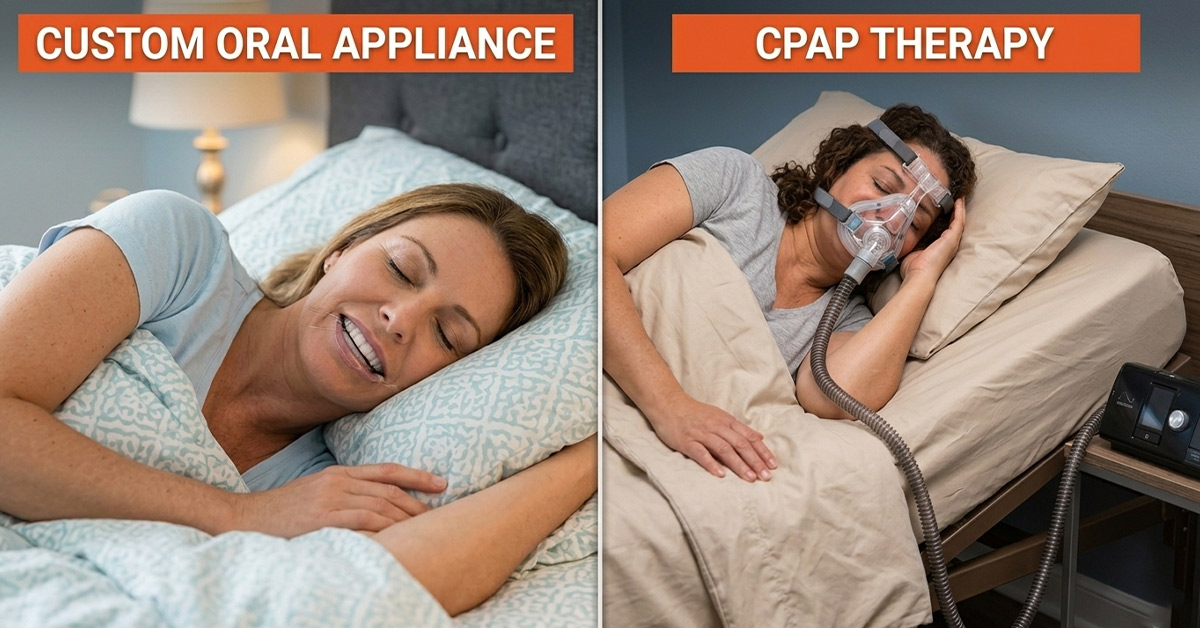
CPAP stands for continuous positive airway pressure. It uses a machine that delivers a steady stream of air through a mask you wear while sleeping. This air is delivered at a controlled pressure, which helps keep your upper airway open throughout the night. Instead of the airway collapsing and blocking breathing, the constant airflow acts like a gentle internal support system that maintains space for normal breathing.
Because sleep apnea is caused by repeated airway collapse, CPAP directly addresses the problem by preventing that collapse from happening in the first place. This is why it is especially effective for people with moderate to severe sleep apnea, where breathing interruptions are more frequent and more disruptive to oxygen levels and sleep quality.
Common Challenges With CPAP
While CPAP is powerful, many people struggle to use it consistently. Some of the most common issues include:
- Feeling claustrophobic wearing the mask
- Dry mouth or nasal irritation
- Air leaks or pressure discomfort
- Noise from the machine
- Difficulty traveling with the equipment
Because of these challenges, many patients don’t use CPAP for the entire night. On average, studies show people use it for about 4.6 hours per night, even though a full night’s sleep is typically 7 to 8 hours. That gap matters more than you might think.
How Oral Appliance Therapy Works
Oral appliance therapy works by physically changing the position of your jaw to help keep your airway open while you sleep. Instead of using air pressure like CPAP, it relies on a small, custom-made device that fits comfortably in your mouth, like a sports mouthguard or orthodontic retainer.
When you fall asleep, the muscles in your throat naturally relax. In people with sleep apnea, this relaxation can cause the tongue and soft tissues to fall backward and partially or completely block the airway. The oral appliance prevents this from happening by gently moving the lower jaw slightly forward. This forward position also helps shift the tongue forward, which increases the space in the back of the throat and reduces airway obstruction.
Because the airway stays more open and stable, breathing becomes smoother and more regular throughout the night. This can reduce snoring, decrease breathing pauses, and improve oxygen flow.
One of the biggest advantages of this therapy is its simplicity. There are no machines, no masks, and no airflow to adjust. It is quiet, portable, and easy to wear, which is why many patients find it easier to use consistently over the long term.
Why Comfort And Lifestyle Matter More Than You Think
Here’s where things get interesting. In theory, CPAP is more effective. But in reality, the best treatment is the one you actually use. Oral appliances tend to be worn longer each night. Research shows that patients use them for about 6.5 hours per night, compared to 4.6 hours with CPAP.
That difference in usage can completely change outcomes.
Think of it this way:
A treatment that works perfectly but is only used half the night vs A treatment that works well and is used all night. In many cases, the second option ends up being more effective overall.
Real-World Effectiveness Comparison
A CPAP user might experience a 95% reduction in AHI when the device is used consistently, and modern machines are now smaller, lighter, and quieter than ever, which has made them more manageable for many patients. However, in real-world use, some people only wear the device for about 4 hours per night, which limits the overall benefit across a full night’s sleep.
On the other hand, an oral appliance user might see around a 60% reduction in AHI, but they often wear it consistently for 7 to 8 hours per night. Because it is easier to tolerate and does not involve a mask or machine, it tends to be used for the entire sleep period more reliably. Even though CPAP can be more powerful in controlled conditions, oral appliances often deliver better real-world results simply because they are worn for longer and more consistently throughout the night.
Adherence And Long-Term Use
Another important factor is how likely people are to stick with their treatment over time.
Over 2 years, studies have shown:
- Oral appliance dropout rate: 47%
- CPAP dropout rate: 33%
At first glance, CPAP seems to have better retention. But here’s the nuance: even among those who continue CPAP, many don’t use it for the full night. So while more people may technically “stay on CPAP,” oral appliance users often have better nightly consistency.
And in sleep apnea treatment, nightly consistency is everything.
Comparing Convenience And Portability
Lifestyle plays a huge role in choosing the right treatment.
CPAP machines require:
- A power source
- Regular cleaning
- Carrying equipment when traveling
Oral appliances, on the other hand, are:
- Small and portable
- Easy to clean
- Silent
- Travel-friendly
If you travel often or just want something low-maintenance, oral appliances are usually the easier option.
Side Effects And Adjustment Period
Both treatments come with some level of adjustment.
With CPAP, side effects often include dryness, irritation, or discomfort from the mask. With oral appliances, some people experience mild jaw soreness or tooth pressure at the beginning. However, most users adapt quickly, especially when the device is properly fitted and adjusted.
Regular follow-ups help ensure everything stays comfortable and effective.
Who Should Consider CPAP?
CPAP is typically the best choice for:
- Severe sleep apnea
- Patients needing precise airway pressure control
- Individuals with complex sleep-related breathing disorders
If your condition is more advanced, CPAP may provide the level of support your body needs.
Who Should Consider An Oral Appliance?
Oral appliance therapy is often ideal for:
- Mild to moderate sleep apnea
- People who can’t tolerate CPAP
- Frequent travelers
- Side or stomach sleepers
- Those looking for a quieter, simpler solution
It’s also a great alternative for people who have tried CPAP but couldn’t stick with it.
Can You Use Both Treatments?
Yes, and many people do. Some patients use CPAP at home and switch to an oral appliance while traveling. Others transition completely after struggling with CPAP long-term. Sleep apnea treatment isn’t always one-size-fits-all. The goal is to find something that works for your lifestyle and that you can stick with consistently.
Why Your Dentist Plays a Role in Sleep Apnea
A lot of people don’t realize that dentists can be part of sleep apnea care.
Since oral structures like the jaw and tongue directly affect the airway, dentists trained in sleep medicine can:
- Assess your airway and bite
- Create custom oral appliances
- Monitor long-term changes
- Adjust the device for comfort and effectiveness
This collaborative approach often leads to better outcomes.
Making The Right Choice For Your Sleep And Health
At the end of the day, choosing between CPAP and an oral appliance isn’t about picking the “best” treatment overall. It’s about choosing the best treatment for you. CPAP offers powerful, controlled therapy, especially for severe cases. But oral appliances offer something just as important: comfort, simplicity, and consistency. And when it comes to sleep apnea, consistency is what truly makes the difference. A treatment only works if you use it every night.
Final Thoughts
Sleep apnea is more than just snoring or feeling tired. It affects your heart, brain, and overall quality of life. Finding the right treatment can significantly improve your sleep, energy levels, and long-term health. If CPAP feels overwhelming, you’re not out of options. Oral appliance therapy offers a practical, effective alternative that many people find easier to live with. The best next step is to talk to a qualified sleep specialist or dentist who can evaluate your condition and guide you toward the right solution. Because better sleep isn’t just about comfort, it’s about your health.